It's Time to Get WISE.
 15-Minute Consultation
A quick, honest call to assess your needs and point you in the right direction—no sales pitch. Best suited for:
- Established businesses with a defined marketing budget
- Businesses prepared to grow and scale
 60-Minute Strategy Session
A deep dive with a top expert to uncover gaps and map a smarter path forward.
- Includes a $250 digital audit covering your website, SEO, local presence, and online performance—yours to keep.
- Get smart, actionable ideas you can apply to your business right away.

Enter the email you would like your guide sent to:

Enter the email you would like your guide sent to:

Enter the email you would like your guide sent to:
Apply Today
Please fill out the information below. Someone on our team will reach out in 3-5 business days to schedule a call if we see a good fit.
Book Patrick Dillon
Thanks for your interest in booking WISE CEO Patrick Dillon on your podcast! Please complete the form below, and a team member will contact you shortly.

Remove Negative Reviews.
Why Your Business Is Getting Fewer Leads in 2026


by WISE Digital Partners
May 19, 2026
- 9 min read
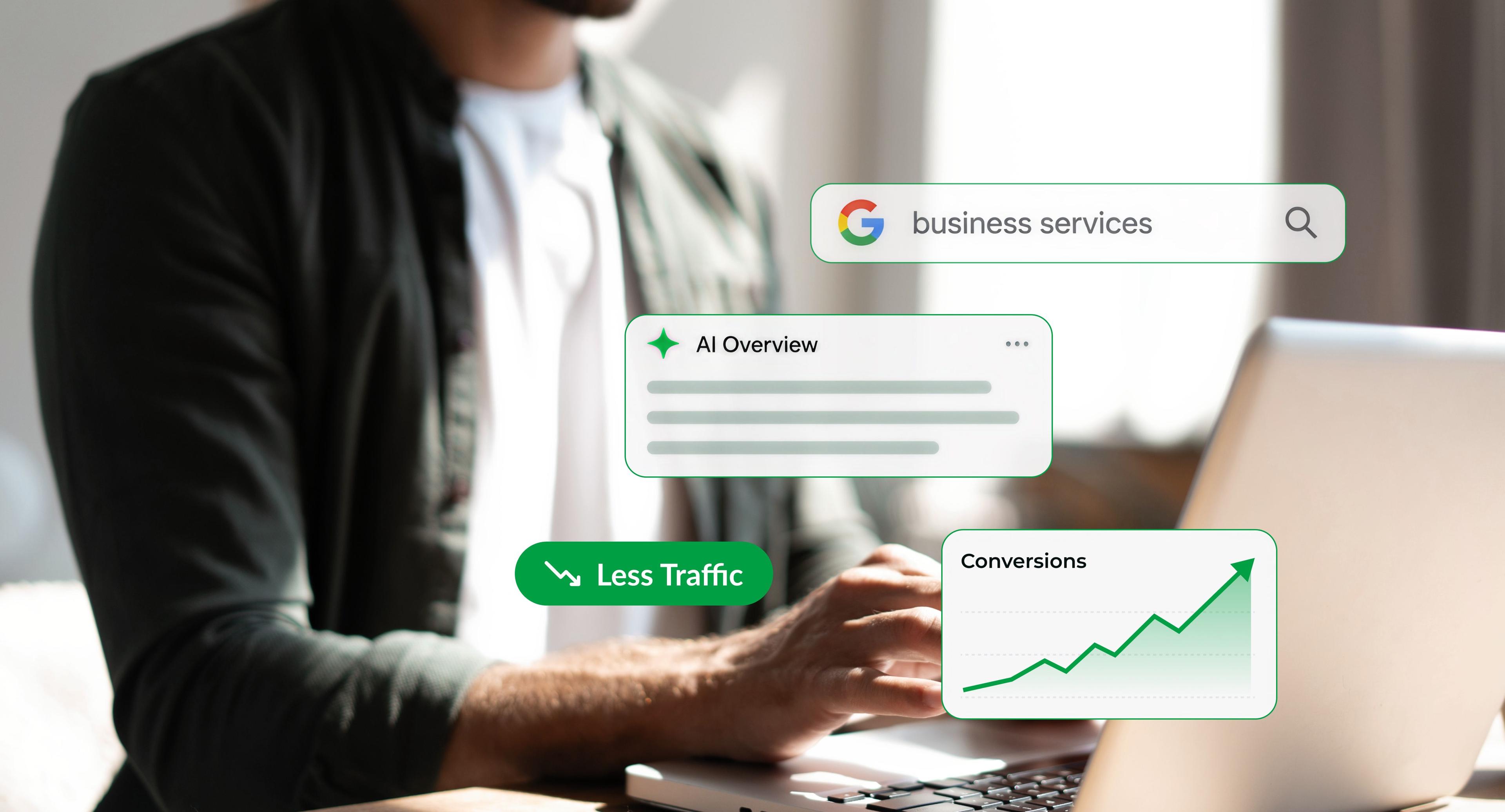
Many businesses are investing more into digital marketing than they were two years ago, yet seeing fewer qualified leads as a result.
The website looks modern. Search rankings may still be strong. Paid campaigns are active. On paper, nothing appears broken.
But the results no longer match the effort.
For many established businesses, the issue is not that their marketing stopped working. The environment around digital discovery changed faster than most businesses expected.
The way people search, evaluate providers, and make decisions is evolving. AI is becoming part of that process. And businesses that continue approaching digital marketing the same way they did even a few years ago are starting to feel the impact.
In 2026, visibility is no longer just about showing up in traditional search rankings. Businesses also need to be visible in the places where AI systems gather information, evaluate authority, and surface recommendations.
That shift is changing what lead generation looks like across nearly every industry.
The Traditional Marketing Model Was Built Around Website Clicks
For more than a decade, the digital marketing model was relatively straightforward.
Businesses invested in SEO, paid advertising, and website improvements to increase their online visibility. The goal was simple: rank well, drive traffic, and convert visitors into leads.
For a long time, that approach worked consistently.
The model depended on users clicking through search results, comparing providers, reviewing websites, and eventually contacting the business that appeared most credible or relevant.
In many industries, more rankings and more traffic translate directly into more opportunities.
But that model relied on one major assumption: users would continue visiting websites as part of the decision-making process.
That assumption is becoming less reliable.
Today, search engines answer more questions directly inside search results. AI-generated summaries reduce the need to click through multiple websites. More users are also turning to platforms like ChatGPT and Google’s AI experiences to ask direct questions instead of browsing through pages of results.
The result is a major shift in how businesses are discovered online.
SEO is still important. Rankings still matter. But visibility now extends beyond traditional search positions alone.
Businesses increasingly need content and digital experiences that AI systems can understand, evaluate, and reference confidently.
Three Major Shifts Are Reshaping Lead Generation
The changes many businesses are experiencing are not tied to a single Google update or marketing trend.
Several shifts are happening at the same time. Together, they are changing how users discover information and how businesses earn visibility online.
Zero-Click Search Is Reducing Website Traffic
One of the biggest changes is the continued rise of zero-click search behavior.
Search engines increasingly provide direct answers within their search results. Users can often get the information they need without ever visiting a website.
Featured snippets, local business panels, FAQs, calculators, maps, and AI-generated responses all reduce the need for users to click through to individual pages.
For example, someone searching for “best business structure for a small accounting firm” may receive a summarized answer directly on the search results page. The question gets answered immediately, and the search session ends there.
In many cases, the search itself now functions as the destination.
This is one reason many businesses are seeing traffic decline even when their rankings remain stable.
That does not necessarily mean their marketing is failing. It means user behavior has changed.
AI Overviews Are Compressing Organic Visibility
At the same time, Google’s AI Overviews are changing how users interact with search results.
Instead of showing a traditional list of links as the primary experience, search engines now generate summaries that combine information from multiple sources into a single response.
Those summaries often occupy the most visible portion of the page, pushing traditional organic listings farther down.
For informational searches, especially, this reduces opportunities for businesses to earn clicks through rankings alone.
This is one reason digital marketing is shifting beyond traditional SEO into broader AI discoverability and Generative Engine Optimization (GEO).
In simple terms, businesses now need content that AI systems can easily understand, evaluate, and reference.
That requires a different approach to content strategy.
Many businesses still approach SEO primarily as a keyword and rankings exercise. But AI-driven search systems evaluate content differently.
Rather than rewarding content built around word count or keyword repetition, these systems prioritize:
- clear meaning
- strong topical relevance
- accurate context
- structured information
- genuine information value
The goal is no longer just rankings.
Businesses need visibility and retrieval across both traditional search engines and AI-driven discovery systems.
AI Recommendations Are Becoming a New Decision Layer
Another major shift is happening even earlier in the discovery process.
More users are beginning their research directly inside AI platforms like ChatGPT and Google AI Mode.
Instead of typing fragmented search phrases, users are asking complete questions such as:
- “Who’s the best CPA for small businesses near me?”
- “What should I look for in a personal injury attorney?”
- “Which marketing agency specializes in growth-stage healthcare companies?”
That changes how businesses compete for visibility.
Traditional search engines historically presented users with long lists of options. AI systems increasingly provide curated recommendations and narrowed selections based on perceived expertise, relevance, and trustworthiness.
Businesses are no longer competing only for rankings.
They are competing to become the business AI systems surface, reference, and recommend confidently.
For established businesses with strong expertise and differentiated services, that shift can create significant opportunities — but only if their digital presence clearly communicates that expertise.
Why This Shift Can Actually Benefit Established Businesses
At first glance, reduced website traffic sounds like a negative trend.
But for many established businesses, traffic volume is not the most important metric. Lead quality is.
As AI systems become more involved in discovery and recommendations, users often arrive at a business website with far more context than they did in the past.
They may already understand the services offered, the industries served, and why the business was recommended in the first place.
In other words, they arrive with a stronger intent.
This changes the economics of lead generation.
Instead of competing for large volumes of low-intent traffic, businesses can now attract fewer but more qualified prospects.
In many ways, this environment favors established businesses that already possess:
- deep expertise
- mature operations
- differentiated service offerings
- strong industry knowledge
The challenge is making that expertise visible online in a way that both people and AI systems can clearly understand.
Businesses that communicate their authority well, publish genuinely useful content, and maintain a technically strong digital presence are often in a stronger position as AI-driven discovery continues evolving.
What Businesses Should Focus on in 2026
As search behavior changes, marketing strategies need to evolve alongside it.
That does not mean abandoning SEO or rebuilding everything from scratch. But it does mean businesses need to rethink how they measure visibility and how they approach content strategy.
Measure Business Outcomes — Not Just Traffic
Many businesses are still measuring marketing success using metrics that no longer reflect how buying decisions actually happen.
Website traffic alone is becoming a less reliable measure of marketing performance.
In many industries, users now consume information directly inside search experiences or AI-generated summaries without ever visiting a website.
That makes it more important to evaluate:
- lead quality
- conversion rates
- sales outcomes
- customer acquisition efficiency
- visibility across AI-driven platforms
The question is no longer simply, “How many visitors did we get?”
Businesses also need to ask whether they are visible where high-intent decisions are being made.
Build Content That AI Systems Can Understand and Retrieve
Modern SEO is no longer centered exclusively around keywords and rankings.
Businesses increasingly need content that helps search engines and AI systems accurately interpret expertise, context, and authority.
That means creating content with:
- clear meaning
- strong topical relevance
- accurate context
- structured organization
- real information value
Businesses that continue publishing generic, interchangeable content may find it increasingly difficult to stand out.
AI systems prioritize content that demonstrates genuine expertise and clearly delivers useful information.
In many cases, concise and authoritative content performs better than longer pages built primarily around word count targets.
The goal is to create content that can be found, understood, trusted, and referenced across both traditional search engines and AI-driven search experiences.
Create a Digital Presence Built for Long-Term Visibility
Strong visibility today extends beyond content alone.
Website performance, user experience, technical structure, local authority signals, and overall digital credibility all contribute to how businesses are evaluated online.
Companies investing seriously in long-term growth increasingly need a digital ecosystem that supports both human users and AI-driven discovery systems.
That includes:
- fast, technically sound websites
- conversion-focused user experiences
- structured business information
- strong local and industry authority signals
- consistent expertise across digital channels
Businesses that approach digital marketing strategically rather than tactically will generally be in a stronger position as search continues evolving beyond traditional blue links.
What This Means Going Forward
The issue many businesses are experiencing in 2026 is not necessarily that their marketing has stopped working.
More often, the environment around digital discovery changed.
Users are searching differently. AI systems increasingly influence what information gets surfaced. And visibility now depends on more than traditional rankings alone.
Businesses that adapt successfully will not simply focus on generating more traffic.
They will focus on becoming more visible, understandable, and trustworthy across the platforms where decisions are now being made.
For businesses investing seriously in long-term growth, adapting to AI-driven discovery is becoming less about chasing trends and more about building sustainable visibility across evolving search environments.
At WISE Digital Partners, we help businesses make sense of those changes through strategic SEO, AI discoverability, web development, and long-term digital growth strategies designed for the evolving search landscape.
If you want to better understand how your business currently appears within AI-driven search environments, our team can help evaluate your visibility, identify gaps, and uncover opportunities for stronger long-term discoverability.
Share
Subscribe to WISE Insights
Stay ahead of the digital marketing curve and never miss a lucrative trend or insightful tidbit – subscribe to our WISE blog!
Keep Reading




Build. Grow. Soar.
Get WISE about digital marketing with advanced services, industry experts, and cutting-edge tools designed for long-term, sustainable growth.