It's Time to Get WISE.
 15-Minute Consultation
A quick, honest call to assess your needs and point you in the right direction—no sales pitch. Best suited for:
- Established businesses with a defined marketing budget
- Businesses prepared to grow and scale
 60-Minute Strategy Session
A deep dive with a top expert to uncover gaps and map a smarter path forward.
- Includes a $250 digital audit covering your website, SEO, local presence, and online performance—yours to keep.
- Get smart, actionable ideas you can apply to your business right away.
Enter the email you would like your guide sent to:

Enter the email you would like your guide sent to:
Enter the email you would like your guide sent to:
Apply Today
Please fill out the information below. Someone on our team will reach out in 3-5 business days to schedule a call if we see a good fit.
Book Patrick Dillon
Thanks for your interest in booking WISE CEO Patrick Dillon on your podcast! Please complete the form below, and a team member will contact you shortly.

Remove Negative Reviews.
ChatGPT Is Now Your Accounting Firm’s Top Referral Source


by WISE Digital Partners
June 4, 2026
- 12 min read
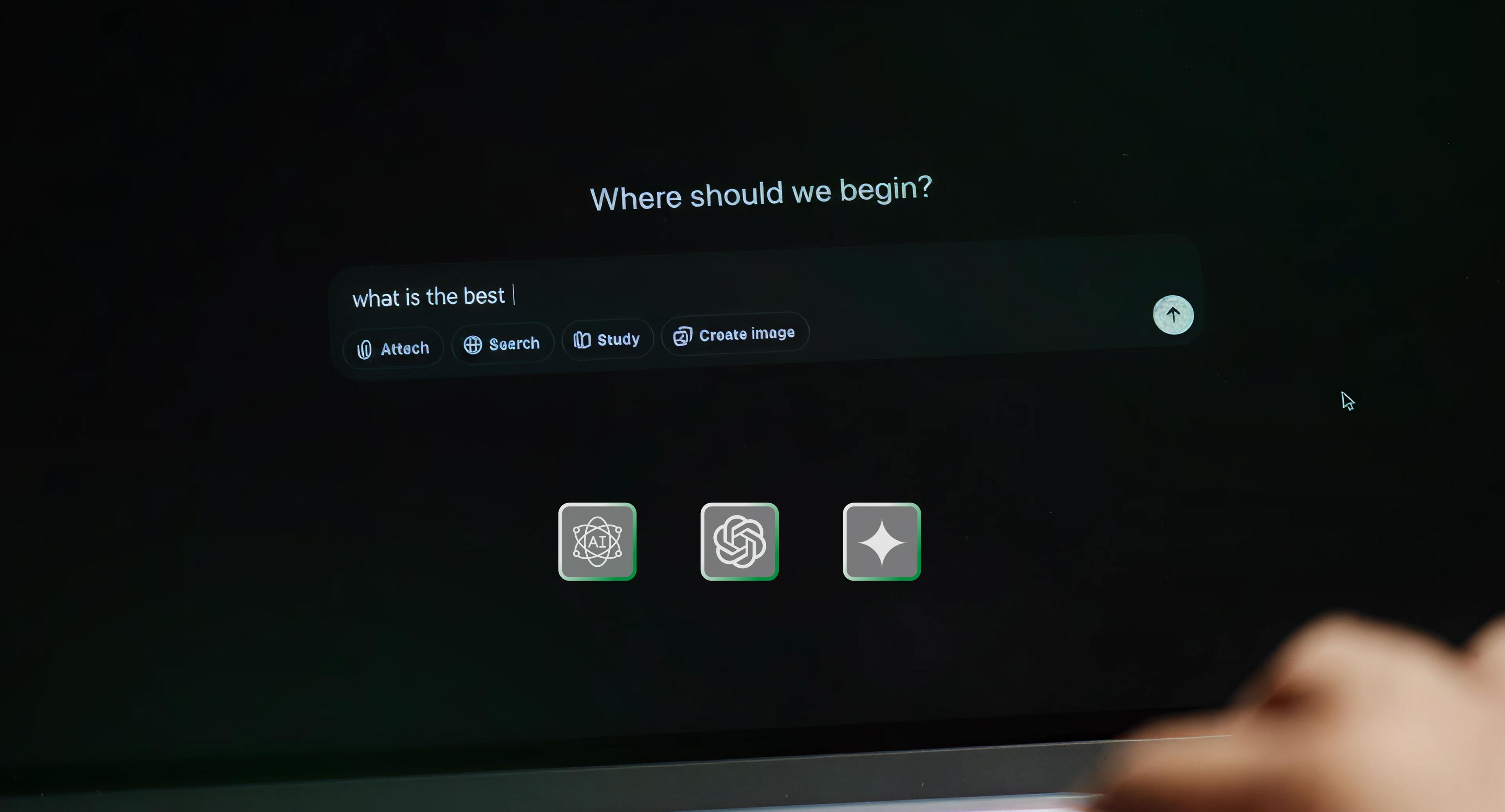
The way your next client finds you is changing. Not overnight, not all at once, but the trajectory is clear enough that ignoring it is starting to carry real cost.
If you're running an established accounting firm with a strong reputation, you've probably built your client base the same way most firms do: referrals, word of mouth, and a solid Google presence. That foundation still matters, but a new channel is growing alongside it: agentic search.
ChatGPT processes roughly 2.5 billion prompts per day. Google's AI Overviews have over 2 billion monthly users. Perplexity, Gemini, and Claude are also growing. People aren’t asking these platforms abstract questions, but specific, high-intent ones like:
- "Do I need a fractional CFO?"
- "What's the difference between a bookkeeper and a controller?"
- "How much should outsourced accounting cost for a 50-person company?"
While AI platforms still account for a small share of total web traffic, the growth in finance is already measurable. AI-driven discovery traffic in the finance sector nearly tripled in a single year, growing from 0.49% to 1.43% penetration between November 2024 and November 2025, according to Previsible. ChatGPT's outbound referral traffic to the broader web grew by 206% during the same period, according to Semrush.
What's small today isn't staying small for long.
Prospects Are Researching Accounting Firms Inside AI Platforms
The way business owners and CFOs begin evaluating accounting services is expanding beyond Google. A growing number of prospects are having conversations with AI platforms before, and sometimes instead of, running traditional searches.
They’re asking full, natural-language questions like:
- "Who are the best CPAs for small businesses in [city]?"
- "What should I look for in a fractional CFO?"
- "What's the difference between a tax preparer and a tax strategist?"
- "Which accounting firms specialize in SaaS companies?"
This behavior is growing fastest in industries where trust and expertise drive the buying decision. Previsible's 2025 AI discovery report found that Your Money or Your Life (YMYL) categories, including finance, legal, and health, are among the sectors with the steepest AI adoption curves.
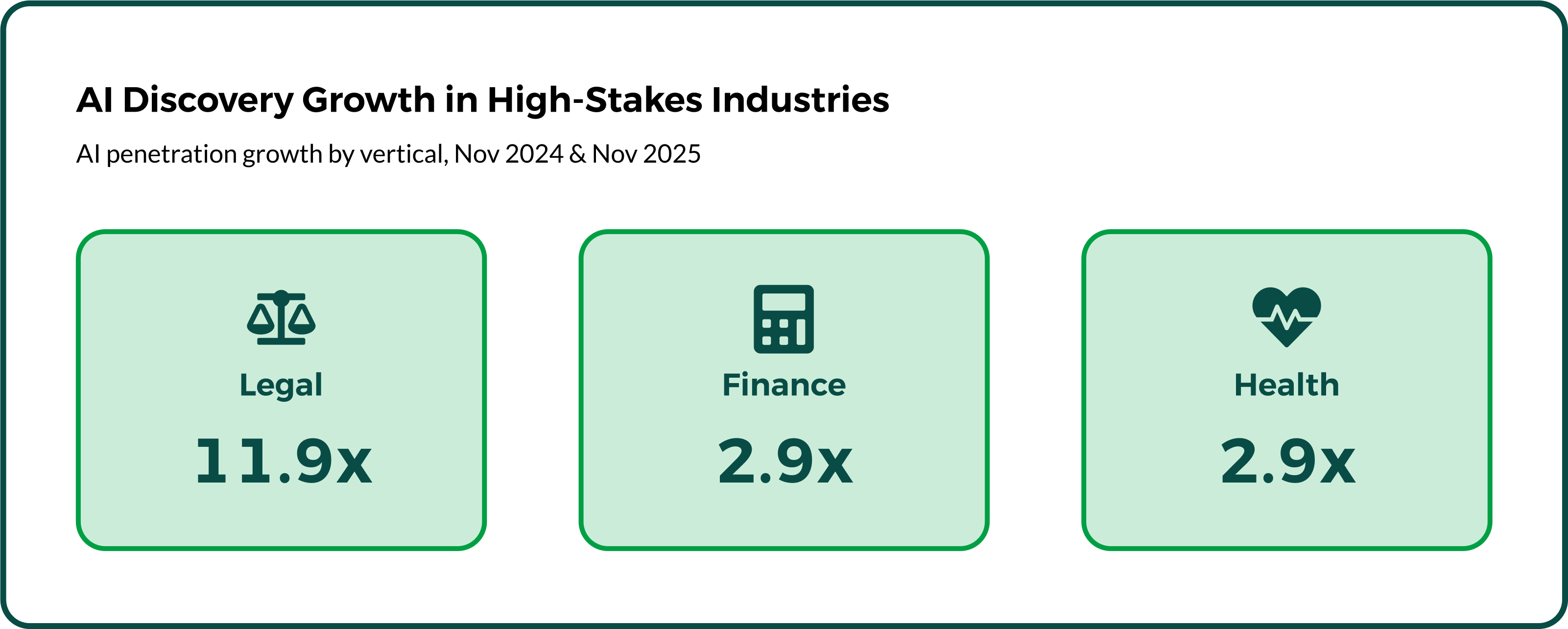
These are early numbers from a small base, but the growth pattern is consistent across all datasets, and is accelerating.
For accounting firms, the shift matters because AI search fundamentally differs from traditional search: it doesn't just reward rankings; it also rewards whether your content can be found, understood, and cited by the AI system generating the answer.
At WISE, we’re seeing a movement from visibility to retrievability. It doesn't replace the need for a website that converts human visitors. It adds a new dimension to what a well-built website needs to do.
AI Referral Traffic Is Small but Disproportionately Valuable
The total volume of traffic coming from AI platforms is still a fraction of what Google sends. That's an important caveat. But the early data on quality adds a dimension that volume alone doesn't capture: prospects who arrive through AI recommendations convert at significantly higher rates than those who come through traditional search.
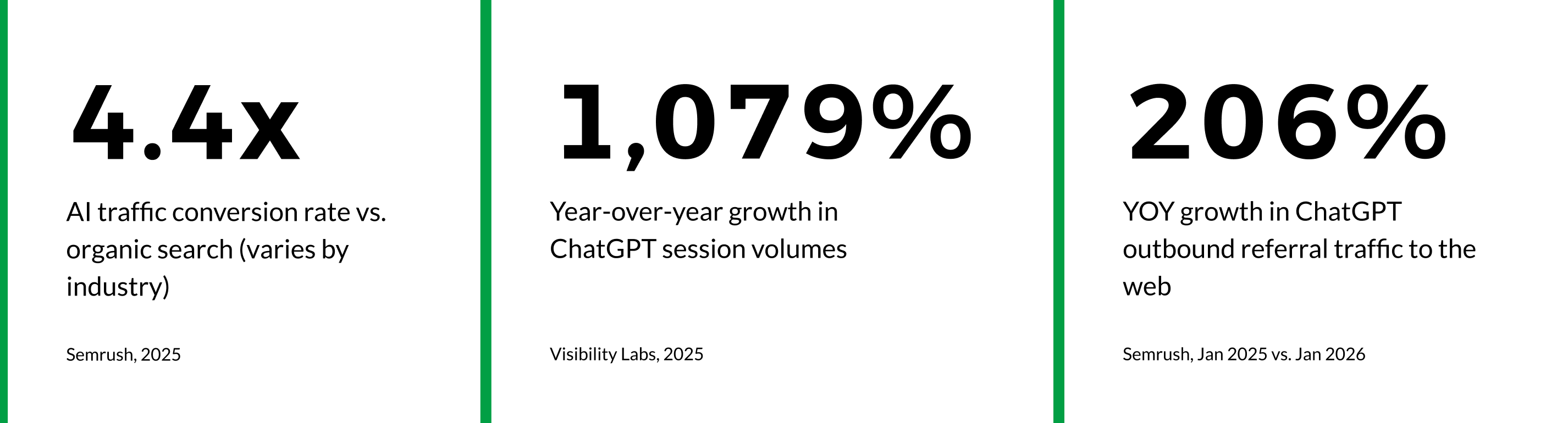
The conversion gap likely comes down to how AI tools work differently from search engines. When someone searches Google, they get a list of links and choose which to click. When someone asks ChatGPT the same question, they get a synthesized answer that may reference specific firms, explain why those firms are relevant, and narrow the consideration set before the prospect ever visits a website.
By the time they click through, they aren't casually browsing. They've already compared options, asked follow-up questions, and arrived closer to a decision than a typical organic visitor.
For accounting firms, where the sales cycle is longer and trust is critical, that dynamic has real value. A prospect who lands on your website because an AI tool recommended your firm for outsourced CFO services arrives with more context and higher intent than someone who clicked a generic Google result for "accountant near me."
The question isn't whether this channel matters today. It's whether your firm will be positioned to capture this traffic as it scales, or whether you'll be catching up after competitors have already established themselves as the firm’s AI systems cite and recommend.
The Traditional Playbook Is No Longer the Complete Picture
Most accounting firms still measure their digital marketing by one metric: Google rankings. Rank on page one, get clicks, convert visitors into leads. That model worked consistently for more than a decade.
In 2026, it is no longer the complete picture.
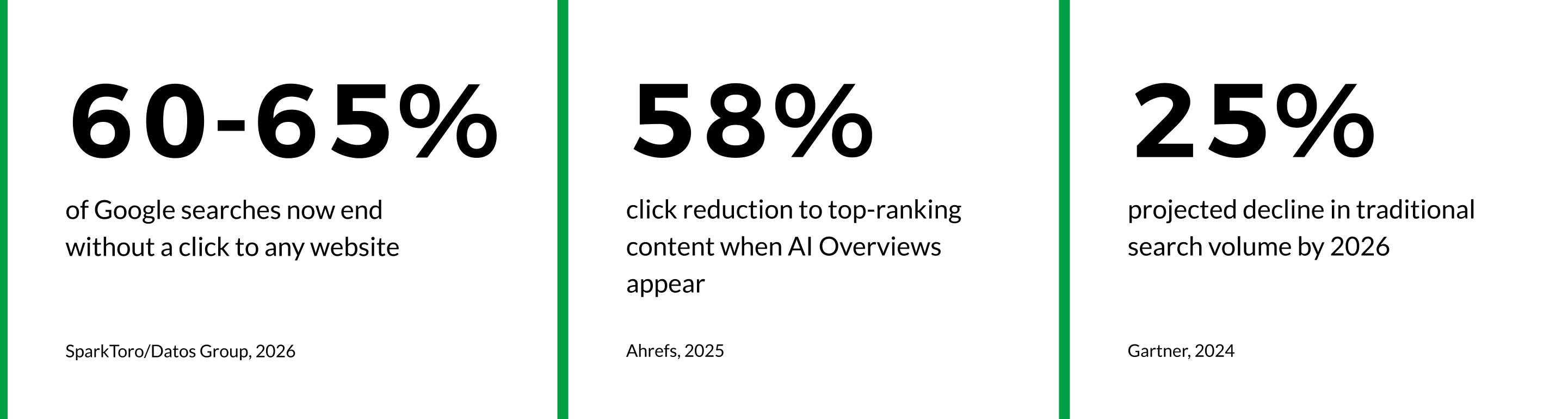
The practical effect: even if your firm's rankings haven't changed, the traffic those rankings generate may be declining. Not because your SEO failed, but because the search experience itself is answering more questions directly.
Where the Clicks Are Going
Google's AI Overviews synthesize information from multiple sources directly on the results page. Featured snippets, local panels, and "People Also Ask" boxes capture additional attention. The user gets what they need without clicking, and the firm that used to get that visit never sees them.
This doesn't mean SEO is dead or that rankings are irrelevant. But it does mean that rankings alone are no longer enough. If you want to keep generating consistent lead flow in 2026 and beyond, your firm needs to be retrievable across both traditional search results and AI-driven discovery platforms simultaneously.
That's a broader definition of visibility than most firms are operating with today.
What Makes an Accounting Firm "Retrievable" by AI
AI platforms don't evaluate your website the way a human prospect does. They don't scan your homepage, get a feel for your brand, and decide whether to call. They process your content structurally. They look for clear, well-organized information that directly answers specific questions with authority, specificity, and enough depth to reference confidently.
A website that's clear, specific, well-structured, and authoritative enough for AI systems to cite is also a website that converts human visitors more effectively.
AI systems pull from a wide range of sources when generating answers: your website, but also directories, review sites, local data, industry publications, and third-party content. Your website is the one input you fully control, and the one where the quality of your content most directly shapes whether AI systems treat your firm as a credible source.
We think about AI retrievability through three lenses.
Direct, Specific Answers to the Questions Prospects Actually Ask
AI systems retrieve content that answers questions head-on. If someone asks ChatGPT, "What does a fractional CFO do and how much does it cost?",the platform looks for sources that clearly address both parts with concrete details, not vague overviews wrapped in marketing language.
Pages that are more likely to be cited tend to include:
- Service scope and deliverables explained in plain terms
- Pricing ranges or engagement structures
- Process steps and timelines
- Clear guidance on who the service is (and isn't) designed for
This is what we mean when we talk about topic depth: high information gain per sentence, not high word count per page.
Authority Signals That AI Systems Recognize
Where Google historically leaned heavily on backlinks to assess trust, AI systems also weigh content quality, topical depth, and whether your content is structured in a way that makes it worth citing.
For accounting firms, that means your website benefits from:
- Case studies with real outcomes -- specific numbers, named results, documented timelines
- Service pages written in the prospect's language -- not internal firm jargon, but the words your ideal clients use to describe their problems
- Expert content addressing the exact questions prospects ask -- written with enough depth and specificity that an AI system would reference it as a credible source
This is the practice we call citation engineering: designing content so that AI systems treat it as a credible, citable source. It's a different discipline than traditional link building, because the audience isn't just human readers. It also includes the AI systems that are increasingly shaping which firms readers hear about first.
A Technical Foundation Built for Machine Readability
A fast, well-structured website serves both human visitors and AI systems. Clean site architecture, fast load times, structured data markup (schema), and clear heading hierarchy all improve the experience for prospects navigating your site and for AI systems parsing your content.
Research from SE Ranking found a correlation between fast-loading pages and higher AI citation rates: pages loading in under 0.4 seconds were roughly 3x more likely to be cited by ChatGPT. That's correlation, not proof that speed alone drives citations. But it fits a broader pattern: the technical qualities that make a site perform well for users also make it accessible to AI.
Why the Platform Your Website Runs On Matters
A site built on a slow, plugin-heavy platform with cluttered architecture creates friction at every layer. AI systems have a harder time crawling and citing content that's buried behind layers of third-party dependencies. Human visitors have a harder time converting on a site that loads slowly or feels difficult to navigate.
The platform matters. Sites built for speed, security, and structural clarity have a measurable advantage in both conversion and AI discoverability.
This is one of the reasons we built NEST™ with these principles as core design requirements: faster load times, built-in structured data, integrated SEO infrastructure, and a streamlined architecture that reduces plugin dependencies, which slow most sites down. For accounting firms, the structural foundation isn't a nice-to-have. It determines how effectively your website serves both human visitors and the AI systems that may send them there.
What to Do About It
The good news is that your firm already has the raw material. You have decades of collective expertise. You have deep knowledge of complex topics like entity structuring, multi-state compliance, and industry-specific tax planning. You have real client outcomes and real operational maturity. AI platforms weigh exactly those qualities: depth, authority, and specificity.
The challenge is that most of that expertise lives in the heads of your partners and senior team. It's not on your website in a form that anyone, human or AI, can access, evaluate, and act on. And closing that gap isn't just about adding a few pages. It requires a coordinated effort across content, technical infrastructure, and strategy, where each piece reinforces the others.
That can feel like a lot on top of an already full plate. But if your firm has real expertise, you're better positioned for this shift than firms trying to manufacture credibility through keyword tactics. The work is about surfacing what you already know, not inventing something new.
Audit Your Website for AI Retrievability
Look at your website through the lens of an AI system trying to answer a prospect's question. Does your site directly address the specific questions your ideal clients are asking? Are those answers concrete and well-structured, or buried under generic marketing language?
What looks fine to a human visitor may be invisible to AI systems. The gap between how your site reads to a prospect and how it reads to a machine is often significant, and it's not something most firms can diagnose from the inside. It requires understanding how AI platforms parse content, which authority signals they weigh, and where your site's structure may be creating friction you can't see by browsing it.
Build Content Around the Questions Prospects Ask AI
Stop thinking in keywords alone. Think in full questions:
- "Do I need a fractional CFO or a full-time controller?"
- "What should a business owner look for when choosing an accounting firm?"
- "How much does outsourced bookkeeping actually cost?"
Each of those questions is an opportunity to publish content that AI systems can retrieve, cite, and recommend, and that human prospects can use to evaluate your firm. But this isn't just about writing a few blog posts. It's about building a structured content ecosystem where each piece reinforces the next, building topical authority that compounds over time in both traditional search and AI discovery.
The quality bar for AI citation is higher than most firms expect. Generic content that checks a box for SEO rarely meets it. AI systems prioritize content that demonstrates genuine expertise, answers questions with specificity, and provides real information value. That takes strategic planning, not just production volume.
Evaluate Your Technical Foundation
AI systems favor pages that load quickly, use clean architecture, and include structured data markup. If your site is slow, plugin-heavy, or difficult for crawlers to parse, your content may not reach the AI systems that could recommend you, and it's probably frustrating your human visitors too.
Content strategy and technical infrastructure need to work together. Great content on a slow, poorly structured platform won't get crawled. A strong technical foundation with generic content won't get cited. The firms seeing the best results are the ones treating these as a single, connected system rather than separate projects.
The platform matters. Sites built for speed, security, and structural clarity have a measurable advantage in both conversion and AI discoverability over sites held together by third-party plugins.
Start Building the Advantage Now
Traditional search still drives the majority of traffic and leads for most accounting firms. That's not changing tomorrow. But if you start investing in AI discoverability now, while competition for AI visibility is low, you'll have a meaningful head start as adoption continues to accelerate.
The work involved isn't separate from good marketing. It is good marketing: clear content, specific expertise, a fast and well-built website, and a digital presence that communicates authority. Those investments compound in every channel.
The firms that treat their website as their #1 salesperson, built for conversion, trust, and visibility across every channel where prospects make decisions, are the ones best positioned for whatever comes next. That has always been true. AI just raised the bar on what "visibility" means.
Share
Subscribe to WISE Insights
Stay ahead of the digital marketing curve and never miss a lucrative trend or insightful tidbit – subscribe to our WISE blog!
Keep Reading




Build. Grow. Soar.
Get WISE about digital marketing with advanced services, industry experts, and cutting-edge tools designed for long-term, sustainable growth.